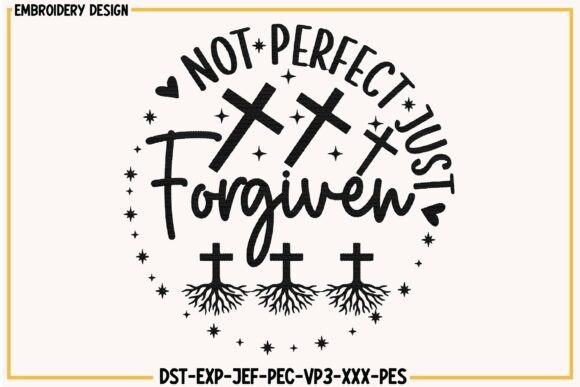
Not Perfect Just Forgiven Embroidery
First Impressions and Design Aesthetic
The Not Perfect Just Forgiven Embroidery design exudes a modern, yet rustic charm that is both relatable and inspiring. The phrase itself speaks to the human experience, making it a perfect fit for a wide range of products aimed at craft fairs and handmade markets. The design's clean lines and thoughtful typography give it a premium feel, while still maintaining a welcoming and approachable vibe.
Performance on Various Products
When considering the Not Perfect Just Forgiven Embroidery for different items, its versatility shines through. Here’s how it performs on various products:
- Tote Bags: The design stands out beautifully on tote bags, especially when embroidered in a contrasting thread color. It adds a touch of elegance and a personal message, making it a popular choice for customers looking for meaningful gifts.
- Aprons: On aprons, the Not Perfect Just Forgiven Embroidery can be a large focal point or a small accent, depending on the style. It works well with both solid and patterned fabrics, enhancing the overall aesthetic of the apron.
- Kitchen Towels: The design is particularly effective on tea towels, where it can be embroidered in a subtle, complementary color. This creates a charming, farmhouse-style look that appeals to many buyers.
- Caps: For caps, the design can be scaled down to fit the curved surface. It’s important to test the embroidery on scrap fabric to ensure the details are clear and the stitch density is appropriate.
- Patches: As embroidered patches, the Not Perfect Just Forgiven Embroidery is a standout. These can be added to jackets, backpacks, or other accessories, providing a unique and personalized touch.
- Fabric Pouches and Pillow Covers: The design adds a decorative and meaningful element to these items. It’s ideal for creating a cohesive look across multiple products, enhancing the visual appeal of your booth display.
Practical Selling and Production Points
The Not Perfect Just Forgiven Embroidery is easy to understand at a glance, making it an excellent choice for both small accents and large focal designs. Its simplicity and clarity make it photograph well for online listings, which is crucial for Etsy sellers and other digital platforms. The design also feels repeatable for batch production, allowing you to create a consistent and high-quality line of products.
Important Considerations for Production
- Dense Stitch Areas: Be mindful of dense stitch areas, as they can cause puckering or distortion, especially on thinner fabrics. Use the right stabilizer to prevent this.
- Tiny Details and Small Lettering: Test the design on scrap fabric to ensure that tiny details and small lettering are clear and legible, especially on textured towels and dark fabrics.
- Curved Surfaces: When embroidering on caps or other curved surfaces, adjust the design to fit the shape and test it to ensure the details are not lost.
Enhancing Visual Appeal and Customer Engagement
The Not Perfect Just Forgiven Embroidery enhances the visual appeal of your products, drawing customer attention and increasing the perceived value. Its relatable and inspiring message resonates with many, making it a strong selling point. To maximize its impact, consider the following:
- Thread Colors: Choose thread colors that complement the fabric and stand out, but also fit the overall aesthetic of the product.
- Hoop Size and Stabilizer: Ensure the hoop size is appropriate for the design and use the correct stabilizer to maintain the quality of the embroidery.
- Real Mockups: Create at least one real mockup of the design on each type of product to see how it looks in person. This helps in making any necessary adjustments before full production.
- Fabric Texture and Color: Compare different fabric textures and colors to find the best match for the design. This ensures the final product looks polished and professional.
Final Thoughts and Practical Tips
Before using the Not Perfect Just Forgiven Embroidery for commercial embroidery, always check the licensing terms to ensure you have the right to sell finished products. Additionally, review the design file for any specific requirements such as stitch count, file format, and hoop size. By following these practical tips, you can create a line of high-quality, visually appealing, and commercially successful products for your craft fair and handmade market.